01 / Storefront
Store Region and App Availability
Your location and store region are different
Whether an app appears in the App Store depends first on the country or region of the Apple account used for purchases and the app's availability in that storefront. Your physical location, device language, and time zone do not determine the storefront on their own. So seeing an app in someone else's search results doesn't mean it will appear for your account. When troubleshooting, note which storefront you actually have open instead of changing your device language or repeatedly restarting it.
Shadowrocket is currently unavailable in the mainland China App Store. If your account uses that storefront, a missing search result or an unavailable product page is likely a region issue, not a device fault. App availability can change, so check the product page in your current storefront for the latest status. The product link in this guide uses the US storefront, but opening it won't change your Apple account region or configure your eligibility to purchase.
What Search Results and Product Pages Tell You
Search helps you find apps; the product page is where you verify the app and check its current availability. A search for Shadowrocket may return other apps with similar names, and search ranking doesn't confirm an app's identity. Start with the Shadowrocket App Store product page and check whether it loads normally, says it's unavailable in your region, or fails to load. Each result points to a different issue—not every problem is simply “can't find it.”
A web page showing the app's details doesn't mean the App Store on your device is using the same storefront. A browser link includes a storefront path, while the App Store on your device handles requests based on the signed-in account. Sometimes the web page loads first, and the App Store only shows a region warning after you open it. That's not a contradiction. Check the country or region in your account settings instead of assuming the storefront has changed based only on the region code in the browser address.
Other Restrictions Can Affect App Visibility
Restrictions on the device can also affect search results and product page access. Screen Time on a family device, app installation policies on managed devices, and age-related account settings may limit which apps appear or can be installed. Check the restriction message and ask the account holder or device administrator with the right permissions to review it. Don't assume every visibility issue is caused by the store region, and don't try to bypass organizational settings.
Compatibility is a separate check. An app may appear in the store even when your device or system doesn't meet its installation requirements. For iPhone and iPad, refer to the system requirements shown on the App Store page, not a specific iOS version in an old guide. Before updating your system, check available storage and backup status. If the page says your device isn't compatible, tapping Get repeatedly won't change that.
Useful troubleshooting notes include your current store country or region, whether the product page opens, the button label shown, and the exact system message. Never share your account password or payment details. For the full process, see how to download the official app from the App Store. If you can already open the product page, continue below to check the developer, icon, and app ID before addressing any payment issue.
02 / Account
How to Check Your Store and Account
Find the account used for “Media & Purchases”
On your iPhone or iPad, open Settings, tap your Apple Account at the top, then find Media & Purchases. Follow the prompts to view the account and Country/Region. The exact labels and menu locations may vary by system version; use what appears on your device. Check the account used for App Store purchases and its country or region—not just Language & Region in the general device settings, which controls display and formats rather than your store account.
The account used for iCloud may differ from the one used for Media & Purchases. Seeing a familiar name at the top of Settings doesn't prove that the store is using the account that originally bought the app. Check on your device that the store account is the one you expect; there's no need to reveal the full address in a screenshot. To restore a purchase, match the current store account to the original purchase history. Before buying for the first time, make sure you'll continue to use and manage that account.
Checking your region doesn't mean you need to change it
When you open Country/Region, start by reviewing the current information; you don't need to submit a change just to troubleshoot. Your account region affects store content, available payment methods, and some existing services. Only change it if you have a genuine need and meet Apple's current requirements, using the official account interface. Before switching, check your account balance, active subscriptions, pending orders, and Family Sharing status, as these may prevent a region change.
If the system asks you to use up a balance, wait for a service to end, or resolve a Family Sharing issue, understand the prompt before deciding what to do. Don't leave a family group or cancel a service you use just to install one app. Some changes have waiting periods; submitting the request again won't speed things up. If asked for payment details, provide accurate information that belongs to you and meets the region's requirements. This guide doesn't provide accounts or handle account or payment matters.
| What to check | What it tells you | What it doesn't prove |
|---|---|---|
| Language & Region | Check device language and formats | That the App Store has switched storefronts |
| Media & Purchases | Confirm the account used for the store | That the account definitely has a past purchase |
| Country/Region | Check the store account's region | That the app is necessarily available in that region |
| Purchase history | Confirm transaction and account ownership | That app configuration is backed up or synced |
Recheck after making account changes
After completing an account change, return to the App Store account page and confirm you're signed in, then reopen the Shadowrocket product page. Don't rely on the price symbol or the language of recommendations; account region information is more direct. If the page still shows the same region warning, close and reopen the App Store, check for pending terms or account verification requests, and then confirm whether the region change actually went through.
On a school, work, or otherwise managed device, account access and installation may be restricted by management policies. Even if the account region is eligible, an administrator may restrict app installation, purchases, or VPN configurations. Review the device management information and contact an authorized administrator. Instructions for a personal device may not apply to a managed one; changing the language, repeatedly signing in, or changing connection settings can't replace administrator approval.
Change one thing at a time while troubleshooting. Check the account first, then its region, and finally reopen the product page so you can see which step changed the result. Changing the language, signing out of multiple services, and resetting the network all at once makes it harder to identify the cause. If search is the only problem and the product page opens normally, continue to the official app checks. If the page explicitly says the app isn't available in your region, verify the account and storefront first; there's no need to change in-app settings yet.
03 / Identity
How to Verify the Developer, Official Icon, and App ID
Search by name; verify identity using multiple details
You can't verify the official Shadowrocket app just by checking whether its title contains the same word. Names, descriptions, and search terms can be similar, so relying on the name alone may lead you to the wrong listing. Cross-check the developer, Shadow Launch Technology Limited, the official icon, and app ID 932747118 on the same App Store product page. All three should point to the same listing. If any detail doesn't match, stop and reopen the product page linked in this guide.
The developer is usually listed near the app name or in the product details. Page layouts vary across devices and storefronts, so look for the developer or provider field rather than treating a mention in the description as proof. Check the full spelling, Shadow Launch Technology Limited, instead of matching just one or two words. If search results show only a preview, open the details page before proceeding.
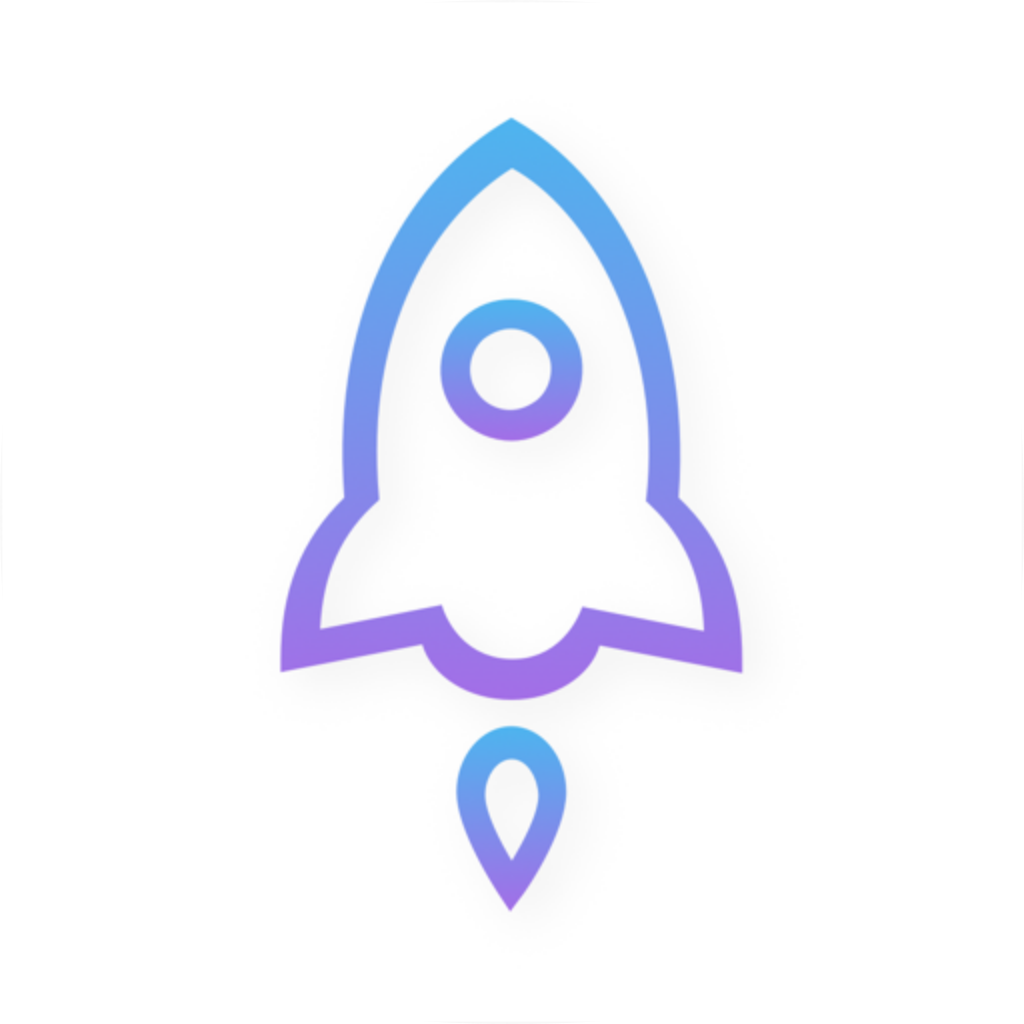
Official Shadowrocket icon
Compare the icon on the store product page with this one, then check the developer and app ID.
The icon helps with identification, but isn't proof on its own
The official icon is a rocket with a blue-violet outline on a white background, and this site uses that same official icon. It can help you spot the app among several listings, but it doesn't replace checking the developer and app ID. Even if a thumbnail looks similar, read the product details too. Image quality, display size, and system rendering can make the same icon look slightly different, so don't rely on subtle color differences alone.
Check the end of the product link for the app ID: the correct listing uses id932747118. The storefront path and app name in the link can affect how the page appears, but the trailing number identifies the app. Don't treat a search results URL, a button on a promotional page, or the name in someone's screenshot as the app ID. The simplest approach is to open the App Store product page linked here and check its share link or browser address.
Use the price and button state as additional checks
The iPhone / iPad version costs $2.99 as a one-time App Store purchase; prices in other storefronts appear in local currency. The Mac, Windows, Android, and Linux versions are free. If you're buying the iPhone or iPad version for the first time and a listing with the same name appears to be free, recheck the developer and app ID right away. If the original account already bought it, the official listing may show a cloud download icon or Open instead. That's a change in purchase status, not proof that the listing is wrong.
Before interpreting the button, work out whether you're buying for the first time, restoring a purchase, or opening an app that's already installed. The store button shows what the current account and device can do; it isn't a fixed identity label. If the same product page shows different buttons on two devices, check the store account on each one, then check installation status. Don't buy again or delete the app just to make the button match a tutorial screenshot.
Shadowrocket is a closed-source commercial app. Verify its identity against the official channel and App Store listing, not assurances on unfamiliar pages. Desktop and Android users can visit the all-platform downloads section for the relevant option; installers for those platforms are provided through this site's download paths. Once you've verified the store listing, continue to the purchase section. If the developer or app ID doesn't match, go back to the correct listing instead of troubleshooting payment.
04 / Purchase
Confirming a Purchase, One-Time Payment, and Fees
Confirm the app and account before purchasing
After verifying the app's identity, check the Get button on the product page and the system purchase confirmation. The iPhone / iPad version costs $2.99 as a one-time purchase in the US App Store; other storefronts show local currency. The current storefront's purchase confirmation shows the actual transaction details. Before confirming, check the app name, signed-in account, and amount. Don't approve a purchase just because the button is in the same place as in a tutorial.
The App Store handles purchases. It may ask for Face ID, Touch ID, or Apple Account verification, or require updated payment details, acceptance of store terms, or resolution of a pending order. These are store account steps, not Shadowrocket settings. Complete them in the system interface; don't share your password or verification code with a website, someone in a chat, or another app. If verification fails, read the exact prompt to determine whether the issue involves payment, the account, or the device.
A one-time purchase is tied to the purchasing account
A one-time purchase means the app's purchase record belongs to the Apple Account that completed the transaction. To reinstall the app or move to a new device, look up that account's purchase history. If your iPhone and iPad use the same purchasing account and meet the current store and device requirements, you can download the app again from that account's records. The purchase isn't limited to a single installation on one device, and deleting the app doesn't automatically erase your purchase eligibility. However, deletion may affect local configuration, which should be managed separately.
If a download doesn't start right after a successful purchase, don't immediately tap a different listing with the same name. Check the App Store account and purchase history to confirm the transaction went through. A payment in progress, a queued download, and a failed transaction are different states; repeating the purchase can make it harder to tell what's happening. If the payment record and product page don't agree, keep track of the order status and check within the store account rather than looking for a purchase restore button inside the app.
Keep app costs separate from service costs
Buying the app gives you the right to use it; it doesn't generate server details, a subscription URL, or connection settings. After installing, configure the app with a subscription or server details you already have. An empty list in an app that opens normally doesn't mean the purchase failed. Likewise, a server you already have failing to connect doesn't by itself indicate an App Store transaction problem. Check app access, configuration import, and connection as three separate steps.
Check the validity period, data allowance, access credentials, and server status for a service you already use in that service's own information. App purchase history doesn't replace those conditions, and a subscription refresh doesn't change which account owns the App Store purchase. If you keep records of your costs, store the App Store order and service management details separately. Don't put a complete subscription URL in a public note or screenshot; it may contain credentials that grant access.
Payment issues and refunds aren't handled in the app
If the store says your payment method is unavailable, you have an outstanding balance, or your account needs verification, resolve that account issue first. Changing DNS, switching Global Routing, or importing a subscription again won't fix payment problems. For orders, billing, or refund requests, use the purchase history and issue-reporting options provided by your Apple Account. Eligibility and outcomes depend on Apple's current policies and the options on the support page; this guide can't promise approval or a refund timeline.
For a transaction you can't confirm yet, note the app name, transaction status, and message, but don't share personal details from the order. Don't assume you completed a purchase just because you left the payment screen; likewise, a failed download after a successful purchase doesn't mean you need to pay again. Once this stage is complete, the correct product page should show a download, installation, or Open status. Next, focus on downloading to the device and configuring the app, not repeating the purchase.
05 / Restore
Restoring a Purchase After a New Device or Reinstall
Find the original purchasing account first
When you get a new iPhone, add an iPad, or reinstall the app, first make sure the App Store is signed in with the Apple Account that originally purchased it. You're restoring that account's purchase history, not a device serial number or an in-app connection account. A device signed in to a different store account may not show the original purchase. Check which account owns the transaction instead of assuming the purchase has expired because the product page shows a purchase button again.
Open the App Store account page and look for Shadowrocket in the Apps or Purchased section. Depending on the system, the entry may be called “Apps,” “Purchased,” or something similar. Search within the purchase history to find the app, then open its listing. Don't confuse the App Store home page search with search in your purchase history: the first searches for apps in the current store; the second looks through items previously obtained by the account. They serve different purposes.
Cloud download button or a new purchase?
When you find the correct purchase record, you can usually reinstall using the cloud download button. The original iPhone / iPad purchase costs $2.99 as a one-time App Store payment; the Mac, Windows, Android, and Linux versions are free. Restoring an existing purchase for the original account shouldn't be treated as a new first-time purchase. If a price confirmation appears again, stop and check the current account, product ID, and original transaction status. Don't proceed based only on the app name matching.
If the app isn't in your purchase list, check whether you're using a different store account, then see if the purchase is hidden. Hidden purchases may not appear in the regular list; look for the relevant management option in account settings. Also check whether you bought the app yourself or access it through Family Sharing. In the latter case, look in the purchasing family member's shared purchases rather than expecting it to appear in your own purchase history.
Redownloading still depends on current conditions
Having a purchase history doesn't mean you can download the app at any time on any device. Availability in the current storefront, device compatibility, content restrictions, account status, and available storage can all affect the download. If the app appears in your list but tapping it brings up a region or compatibility warning, follow the prompt for that specific issue. Don't ignore a clear download restriction just because you have a purchase record, or mistake it for a need to buy the app again.
Before deleting the app, make sure you've saved your configuration the way you need it—especially server details entered manually and modified configuration files. If the app still opens, check what you need to keep before deciding to reinstall. The store manages purchase history, while local data may be lost when the app is deleted. Don't erase the only usable copy of your configuration just to address a temporary download message in the store.
An update asks you to verify a different account
If an unexpected store account verification request appears when updating Shadowrocket, the installed copy may be associated with a different account's purchase history. First work out how it was installed and which purchases belong to your account; don't repeatedly guess passwords. Consider reinstalling only after confirming that your account is eligible to get the app and saving any configuration you need. Reinstalling affects local data and shouldn't be treated as a casual way to switch accounts.
If you can no longer access the original purchasing account, use Apple's account recovery process first. This site can't look up personal orders or transfer a purchase from one account to another. For a step-by-step check, see how to redownload from your purchase history on a new device. Once the app is installed, import a configuration or subscription you already have. For connection steps, continue to the quick-start tutorial; you don't need to repeat the first-time purchase process.
06 / Family
Family Sharing: Eligibility, Where to Find Purchases, and Limits
Check the product page, then your Family Sharing settings
Family Sharing is an Apple Account feature. To see whether an app can be shared through family purchases, check both the current product page and your Family Sharing settings. Joining a family doesn't mean every app will automatically appear. First check the Shadowrocket product page for Family Sharing information. Then ask the family organizer to confirm that purchase sharing is enabled and that the person who bought the app is in the same family group.
Family Sharing and using one purchasing account across several personal devices are different situations. The former depends on each family member's account and sharing settings; the latter uses the purchase history for one account. Work out which applies before troubleshooting. Each family member should use their own Apple Account and the Family Sharing options in Settings. There's no need to share account passwords or sign out of a personal account just to look for a shared purchase.
Find the purchase in the buyer's shared history
In the App Store's account purchase history, look for the family member's purchases, select the person who bought Shadowrocket, and search for the app. If you look only in your own purchase history, you may not see an app bought by another family member. Menu labels vary across systems, so use the family member list and app purchase history as a guide instead of searching for a button in an old screenshot. Once you find the listing, verify its developer and app ID.
If the app isn't in the family member's purchase history, ask the buyer to confirm the transaction completed. Then check whether the purchase is hidden, purchase sharing is enabled, and any Family Sharing requests are pending. Joining a family can't complete an unsuccessful purchase or change the app's availability in a storefront. Check these conditions one by one instead of having several members buy the app again or change their account regions.
Consider region and account restrictions together
Family purchase sharing is subject to Apple's current region and account rules. Different storefronts, incomplete account verification, or changes to a family group may affect availability. Check the prompts in the device's Family Sharing and App Store settings for current restrictions. Keep the exact message and review the relevant family members' account status. Another device being able to download the app doesn't prove your device has a network problem.
Successfully sharing the app doesn't mean the buyer's server list, connection credentials, or Config files will be shared with other family members. App access and access to a service aren't linked automatically. A family member opening the app for the first time may see an empty list, which is a normal starting point. Before transferring anything, confirm who owns the information and whether the service permits its use. Avoid exposing sensitive links.
What to expect if you leave a family group
Changes to Family Sharing or purchase sharing may affect access to the app and future downloads for members who rely on shared purchases. Before making changes, read the system information, save any local configuration you need, and check whether your personal account has its own purchase record. Shared access doesn't mean the purchase has been transferred to your account. If you need to manage a device independently long-term, confirm your eligibility before changing family settings so you don't discover an unclear purchase history when switching devices.
Pricing still depends on the platform: the iPhone / iPad version costs $2.99 as a one-time App Store purchase; the Mac, Windows, Android, and Linux versions are free. Whether Family Sharing applies to your account depends on the product page and Apple's Family Sharing settings; this guide can't guarantee it works in every family situation. If the sharing option appears but the download fails, check compatibility, content restrictions, and account prompts. If you can't find the buyer's purchase, first resolve the sharing setup and transaction ownership.
07 / Diagnosis
Troubleshooting: Can't Find, Buy, or Download Shadowrocket
Identify the failing step before reinstalling
Start by describing exactly where the problem occurs: no result in search, an unavailable product page, an incomplete purchase verification, an icon stuck on Waiting, or an installed app that won't connect. These issues belong to different stages: store discovery, account transactions, download transfer, and app configuration. Identify the stage first so you don't use the wrong fix. For example, changing Config won't fix a store transaction, and signing out of the store won't correct server settings. Don't delete the app or reset the device before identifying the issue.
| What you see | Check first | Next step |
|---|---|---|
| Can't find the correct listing | Storefront, spelling, content restrictions | Open the correct product page directly |
| Product page says it's unavailable in your region | Store account Country/Region | Check the storefront and current availability |
| Purchase verification won't complete | Payment, terms, account status | Resolve the account issue in the system prompt |
| Icon shows Waiting or progress is stalled | Network, storage, download queue | Restore download conditions one at a time |
| App opens, but connection fails | Existing service, imported settings, routing | Troubleshoot the connection and configuration |
Search or Product Page Problems
If you can't find the app in search, enter Shadowrocket in full, then open the correct product page to distinguish a missed search result from a storefront where the app isn't available. If the page opens, check the developer and app ID; if it shows a region warning, check the account region. If other App Store pages also fail to load on the same device, the store's connection or service status may be the issue. Don't assume every blank page means the app has been removed; check whether other pages load normally.
If the page mentions age or content restrictions, check content and privacy restrictions in Screen Time and ask someone with the right permissions to review them. On a managed device, also check the organization's app installation policies. Restrictions may affect whether the app appears or only show up when you tap Get. Don't disable an entire set of safeguards; find the specific setting related to the message. If you don't have permission to manage it, stop and contact the device administrator.
Payment Failed or Download Stalled
If payment fails, check for payment method verification, billing details to confirm, pending orders, or account terms. Follow the system prompt for the specific issue; don't keep trying to buy the app to test whether your account works. If the transaction shows as successful but installation hasn't started, check purchase history and the download queue. Another app may be using the queue, or the system may be waiting on a requirement. Don't switch to a similar listing and mix up an identity issue with a transaction issue.
If download progress is stuck, check available storage and whether your current network can reach the App Store, then try pausing and resuming the download. If you're on a restricted network, test again on another network you're authorized to use. Change one thing at a time and note the result. If storage is low, remove data you no longer need. If the app still contains important configuration, don't make deleting it your first choice for freeing space.
Compatibility, Account Verification, and Service Status
If you see a compatibility warning, use the system requirements shown on the current App Store page and check whether your device can be updated appropriately. Back up your device and check available storage before updating. If the message says your account is disabled, needs verification, or can't make purchases, follow the recovery steps on your Apple Account page. Neither the app developer nor this site can verify your personal account or remove store restrictions through app settings.
If several apps won't download or multiple product pages are affected, check system service status and account messages, then try again when service is reported as restored. Resetting network settings can remove saved network information, so it shouldn't be your first step. Sign out only after considering your credentials and what may be affected. When asking for help, share only the device type, the step where the issue occurs, and a redacted message. Don't reveal a full bill, subscription URL, or verification code.
For search issues, see three checks for apps missing from App Store search. If the app opens and you can see Home, the acquisition step is usually complete; troubleshoot connection failures using the connection checks in the tutorial. Addressing the issue at the right stage is more effective than repeating the purchase and reduces the risk of accidentally losing local configuration.
08 / Handoff
Configuration Handoff and Ongoing Maintenance
Set up the app with information you already have
Once the App Store shows Open and Shadowrocket opens normally, the purchase and installation steps are complete. If the server list is empty the first time you open it, use a subscription URL or server details you already have and follow the quick-start tutorial to import them. This page covers purchase eligibility and the App Store process; the tutorial covers Add Server, Subscribe, Global Routing, and connection checks. Follow them in that order—there's no need to purchase the app again.
Before importing, identify what kind of information you have. A subscription URL retrieves information maintained by a service you already use; individual server details are entered for a specific connection; a Config file may contain rules and other settings. Confusing these can cause an import to fail or overwrite existing configuration. Read the source's instructions and choose the right option. Don't replace your current file with a configuration you don't understand or trust. If your current setup works, save a copy before making individual changes.
What Global Routing and rule files do
Global Routing has three modes: Config, Proxy, and Direct. Config applies the rules in the current configuration, while Proxy and Direct select different overall routing behavior. Choose a mode for your intended use; it doesn't indicate purchase status. If switching to Direct changes the result, it only shows that the routing path changed, not whether the app was purchased. Check store transactions and connection settings separately.
[General]
bypass-system = true
dns-server = system

[Rule]
DOMAIN-SUFFIX,example.com,PROXY
GEOIP,CN,DIRECT
IP-CIDR,192.168.0.0/16,DIRECT
FINAL,PROXY
This Shadowrocket configuration snippet is for explaining rule syntax; it doesn't include a server you can connect to. DOMAIN-SUFFIX matches domain suffixes, GEOIP matches based on the destination address's geographic location, IP-CIDR matches address ranges, and FINAL handles requests that haven't matched earlier rules. Rules are generally evaluated from top to bottom; PROXY and DIRECT are policy keywords. The example domain is for illustration only. This text isn't a subscription with connection access.
App Updates and Subscription Updates Are Separate
App updates for iPhone and iPad are handled in the App Store. Subscribe refreshes information from a service you already use. The first updates the app; the second updates imported data. They don't replace each other. If a server entry disappears after refreshing a subscription, check what the service returned. If the App Store asks you to verify an account for an app update, check the purchasing account instead of refreshing in Subscribe again. Identify what you're updating before troubleshooting.
Before updating the app, make sure you have a usable backup of important configuration and note the name of the Config file you're currently using. Entries in a subscription may change as the service updates them, and manually edited entries may be affected by a later refresh. Understand how your setup is managed. Change one setting at a time and record the before-and-after state, what you're testing, and the result. That makes it easier to tell whether an issue comes from rules, DNS, or the service you already use.
Where to Find Other Platforms and System Permission Instructions
The iPhone / iPad version costs $2.99 as a one-time App Store purchase. The Mac (Apple Silicon and Intel), Windows, Android, and Linux versions are free. For other platforms, use the relevant button on the app downloads page; installers are provided through this site at /dl/shadowrocket/. If the system blocks the app the first time you open it, check the file source and system message, then see the installation permission guide. A system warning doesn't mean you need to buy the app.
On Windows, if SmartScreen appears, verify the source and check the Run option under “More info.” On Mac, review the block message and “Open Anyway” option in Privacy & Security. On Android, grant permission for the installation source you're using. On Linux, follow the installation steps for your package format; AppImage files also need execute permission. If a warning uses different wording or isn't covered on the downloads page, stop and find out why instead of dismissing every warning automatically.
For ongoing maintenance, keep track of the purchasing account, necessary configuration backups, and subscription management information for services you already use. Don't share complete connection details in public support requests. For rule order, see how rule keywords are matched; for protocol fields, see protocol types and configuration tips. Return to the relevant section here for store issues and to the tutorial for connection issues. Troubleshooting each at the right stage keeps purchases, installation, and service status from being confused.